Receiving, Storage, Delivery, and Installation (RSDI) is a multi-vendor logistics operation with POs, lead times, punch lists, and a client walkthrough waiting at the end of it. Below is the interior designer moving checklist we use with trade partners across Teton County as part of our Designer & Trade Services, organized by project stage so you can confirm the right details before that first shipment ever leaves the warehouse.
If you want us to build this out with your project timeline, request a quote and we’ll walk through it together.
The Interior Designer Moving Checklist: What to Confirm Before the First Shipment Arrives
Before any freight moves, run through this pre-move checklist with your logistics partner and vendors:
Project setup and POs
- Every PO lists the receiving warehouse as the ship-to address.
- Dimensions, finish, and quantity on each PO match the design spec.
- Interstate carriers and brokers have active FMCSA operating authority.
- Storage terms and release timing are written into your client contract.
Receiving and inspection
- Freight appointments are confirmed with each vendor and logged against your install date.
- A receiving contact is designated for every shipment window.
- Each carrier’s damage reporting deadline, from its bill of lading, is on file.
Storage
- Release dates are tracked against the build schedule.
Pre-install
- Floor plans with access dimensions are on file for the install site.
- The contractor or property manager has confirmed site readiness and access.
Delivery and closeout
- Delivery sequence and placement plan are set.
- The final inventory list is ready for walkthrough sign-off.
If you want us to build this out with your project timeline, request a quote and we’ll walk through it together.
Project Setup and Purchase-Order Tracking
A clean PO is the foundation of any checklist for interior design logistics. Every PO should list product details, dimensions, item number, material, finish, quantity, and the receiving warehouse’s information. Once confirmed, we organize POs by vendor and order date into a procurement schedule, which keeps production timelines visible and orders aligned to the install date.
Establishing Freight Appointments and Vendor Communication
Freight appointments get set as vendors confirm ship dates, and vendor communication stays open throughout production. A good system links POs, vendor contacts, and delivery schedules in one place, which saves time and catches missing items before they become a problem on install day. We handle this coordination directly with vendors, so designers aren’t chasing freight companies between client meetings.
Matching Items to POs Before They Ship
Before a vendor ships, confirm the order acknowledgment matches the PO for quantities, finishes, and dimensions. When freight arrives, the shipping label, packing slip, and delivery receipt should all cross-check against that PO. Every shipment routes to our warehouse first, so each piece is inspected and documented before it ever reaches the client’s home.
Receiving and Condition Inspection Checklist
FF&E receiving is where problems get caught early or missed entirely. Run this checklist on every delivery:
- Confirm the shipment against the PO and packing slip.
- Inspect each item for damage and finish issues, and verify specs match.
- Photograph every piece, front and back, before it’s moved into storage.
- Log the item into inventory with condition notes attached.
- Hold items in a controlled environment until the install date.
We log everything on arrival and hold it securely until the client’s site is ready. It’s a system built specifically around interior designer receiving services, since vendor freight for design projects behaves differently than a standard residential delivery.
Documenting Damage with Photos and Vendor Notification
If damage turns up at receiving, we note it on the delivery receipt, photograph it, and notify the vendor and the delivering carrier right away, so the designer isn’t left chasing the claim. Delaying notification on high-value pieces weakens any claim down the line, and concealed damage deadlines are set by each carrier’s bill of lading, not a single federal rule.
Federal law doesn’t let a carrier give you less than nine months to file a claim, and once a written claim is filed, the carrier must acknowledge it within 30 days and pay, decline, or offer a settlement within 120 days. None of this replaces reviewing your specific coverage, which is a conversation worth having with your logistics partner before a shipment ever ships.
Storage and Inventory Management for Active Projects
Designer storage services exist because install dates rarely line up neatly with delivery dates. Once items clear inspection, they move into climate-controlled storage where humidity and temperature stay steady, keeping wood, upholstery, and finishes safe from environmental swings. Items should be clean and dry before they go into storage, since climate control protects against environmental damage, not against improper packing.
Our secure storage space is monitored and fully insured for both short and long-term project holds. Dedicated trade receiving warehouses like ours safeguard items, track inventory precisely, and keep everything staged for delivery the moment a site is ready.
Tracking Storage Release Dates and Access Needs
Storage fees can stack across stages: storage itself, freight and handling into the warehouse, then white-glove delivery to the home. Building these into the client contract upfront avoids awkward conversations later. Track release dates against the build schedule, and confirm access needs before scheduling the release, whether that’s a gated entry, a timed window, or a contractor’s site restrictions.
Pre-Install Coordination: Floor Plans, Access, and Contractor Readiness
Before delivery day, floor plans should note access dimensions, since narrow staircases and elevators can restrict what actually fits through the door. We generally plan for 18 to 24 inches of clearance around placed furniture, accounting for outlets, vents, and switches. High-rises add another layer: freight elevator scheduling and building-management notice requirements that standard carriers often aren’t equipped to handle.
Confirm contractor readiness, too. Deliveries into homes still under construction need coordination with the build schedule so furniture isn’t sitting in a space still getting painted or wired. We coordinate these details directly with property managers, general contractors, and site supervisors throughout Teton County, so install day doesn’t collide with someone else’s punch list. If your project has tight access windows or an active job site, request a quote early so we can plan around it.
Delivery, Installation, and Closeout
An RSDI delivery day looks different from a residential moving day. This is the delivery-day timeline we follow:
- Arrival at the site with confirmed access and parking.
- Inspection walkthrough against the floor plan before anything comes off the truck.
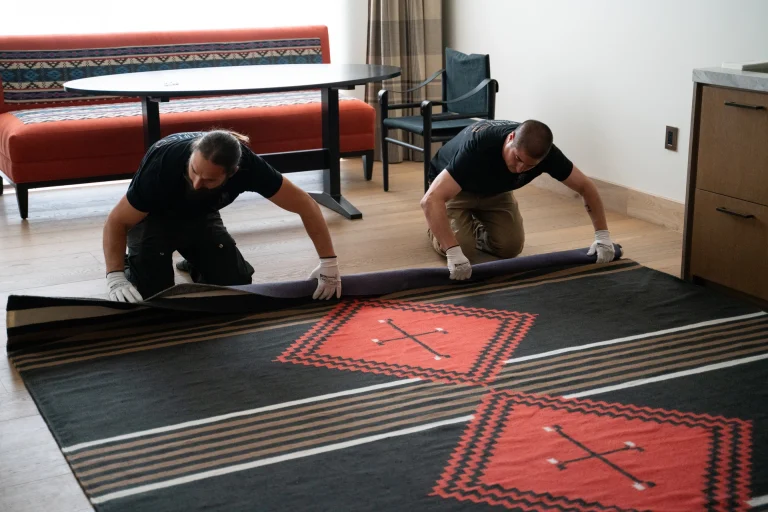
- Placement of each piece according to the design plan.
- Assembly and reassembly of furniture requiring on-site setup.
- Debris and packaging removal before the client sees the space.
- Client walkthrough and sign-off on the final inventory list.
Delivery Sequencing and Furniture Placement
Delivery date gets confirmed once all pieces for the project have arrived and cleared inspection. The floor plan is reviewed, assembly needs are confirmed, and the white-glove crew is scheduled around the contractor and property timeline. Sequencing matters here, since the wrong piece arriving first can block a doorway or hallway for everything behind it.
Assembly, Debris Removal, and Final Condition Review
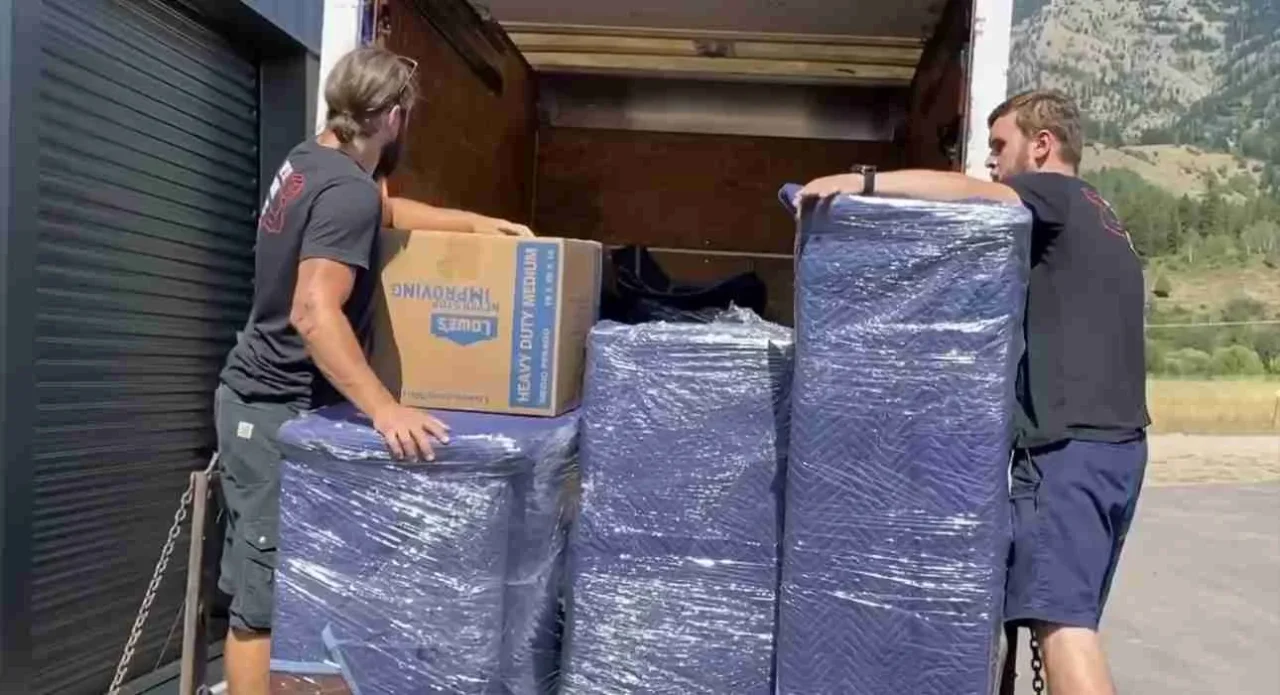
Everything gets delivered, placed to plan, assembled, and unwrapped for the reveal, with all packaging removed on the spot. Before sign-off, we do a final condition review and note anything damaged or missing on the inventory list. Careful wrapping, floor and wall protection, and precise placement and reassembly are standard on every job we run, not something a designer needs to ask for separately.
Project Stage Responsibility Table: Designer, Logistics Partner, and Documentation
Responsibility across an RSDI project typically splits like this:
| Project Stage | Designer Responsibility | Logistics Partner Responsibility | Documentation to Confirm |
| PO/Setup | Confirm PO details and ship-to address | Confirm freight appointment and vendor communication | PO, procurement schedule |
| Receiving/Inspection | Confirm item specs against design intent | Inspect, photograph, and document condition | Packing slip, condition report, photos |
| Storage/Inventory | Track release timing and contract terms | Provide climate-controlled storage and inventory management | Inventory log, storage record |
| Pre-Install Coordination | Provide floor plan and confirm contractor readiness | Schedule access, elevator, or loading dock needs | Floor plan, access notes |
| Delivery/Install/Closeout | Conduct client walkthrough and sign-off | Deliver, place, assemble, and remove debris | Sign-off sheet, final inventory review |
Jackson Hole Considerations: Remote Properties, Seasonal Access, and Large Estates
Interior design logistics in Jackson Hole come with terrain and access challenges you won’t find in most markets. Steep Teton Village driveways, narrow canyon roads with no shoulder, and gated properties with timed access windows all require planning that a generic mover’s checklist doesn’t cover. Remote properties add drive time and leave little room for a missed piece, so every item for a delivery gets confirmed before the truck leaves the warehouse.
Winter adds its own limits: snow-covered driveways, chain requirements, and Teton Pass, where trailers are banned from November 15 through April 1 and closures should be expected during heavy snow. Packed roads and limited parking during ski season can turn a two-hour delay into a real cost, so scheduling around the season matters as much as scheduling around the vendor.
Large estates can take half a day just for inventory, and many of our clients are seasonal or absentee owners. That usually means our point of contact is a property manager, caretaker, or builder, not the homeowner directly, and deliveries into homes still under construction get scheduled around the contractor’s timeline. Wood furniture is also sensitive to the move between cold trucks, dry indoor heat, and unconditioned spaces, which can lead to cracking or warping, so pieces stay in climate-controlled storage until the site is ready.
We Lift Things: Your Local Partner from Receiving Through Installation
Local Experience Since 2018
We’ve partnered with designers and home goods stores throughout Teton County since 2018, handling receiving, inspection, secure storage, white-glove delivery, and placement for design projects across Jackson, Teton Village, Wilson, and Star Valley. High-value pieces get careful packing, custom crating, and detailed inventory documentation as a matter of course, and every long-distance shipment runs through a verified FMCSA process for interstate vendor freight.
As designer trade services go, our value comes down to local knowledge and follow-through: knowing which roads and driveways need extra planning, and treating white-glove handling as the standard on every job, not a line item to upsell.
Get Started
If you’re planning an active project and want a moving checklist partner who already knows the terrain, reach out to our team or read more about us before your next shipment ships.